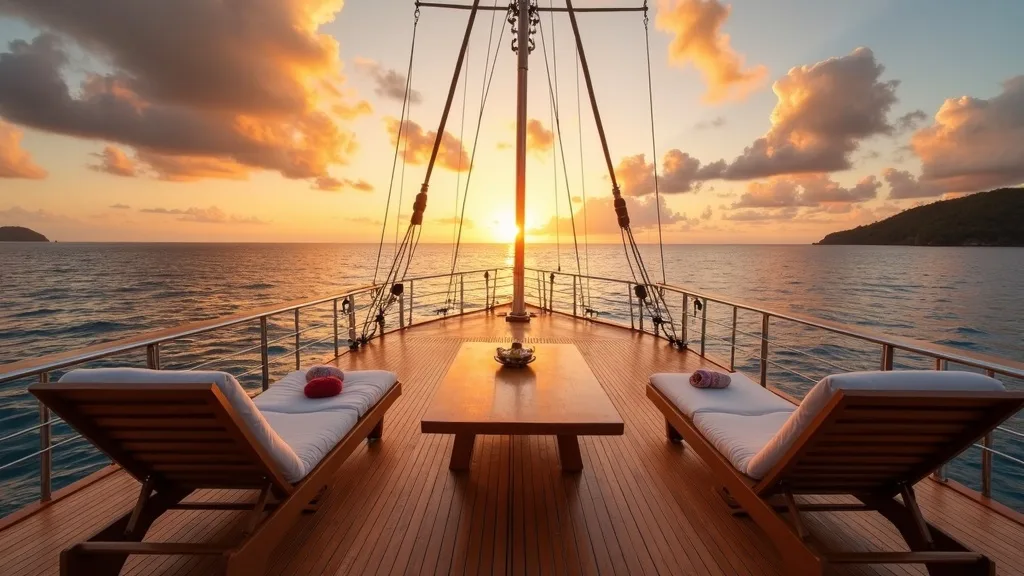
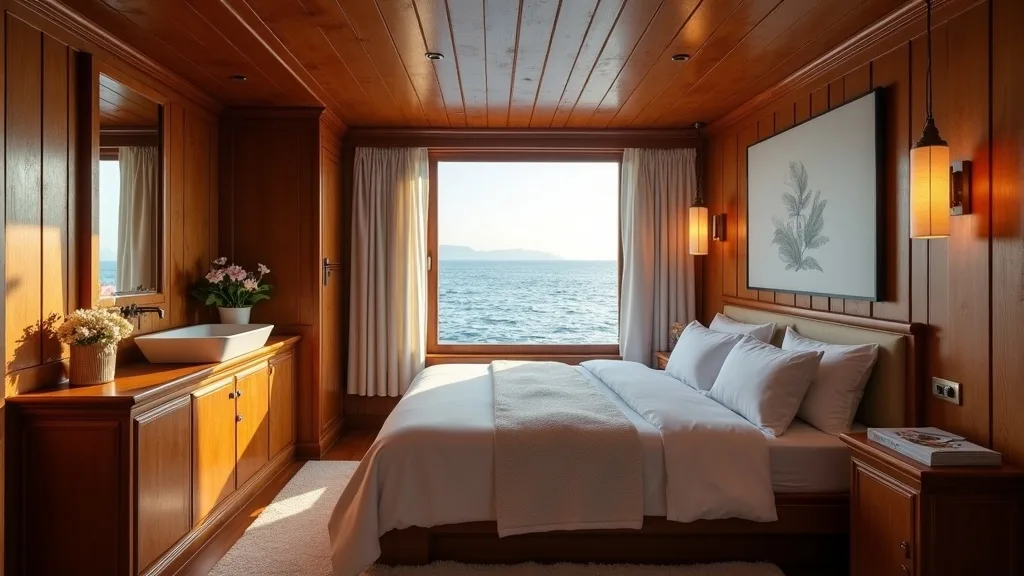
Birds of paradise display at dawn, so viewing them in Raja Ampat means a pre-dawn start. A boat anchored offshore overnight gets you to the hide first. Red bird of paradise is endemic to Waigeo and Batanta and watched from hides near Sawinggrai; Wilson’s bird of paradise is found on the same two islands.
Why does a boat make birdwatching easier here?
Because the birds keep office hours and the hides are a long way from anywhere you could otherwise sleep. Male birds of paradise display at first light — a window of perhaps forty minutes when they call, clear their display perches and perform. Arrive at 07:30 and you have arrived for the aftermath.
A charter solves this without heroics. The vessel anchors off the village the previous evening; you take the tender at around 04:30, walk in with a local guide in the dark, and are settled at the hide before the first call. Guests staying at a distant base are still in a speedboat at that hour. This is the same structural advantage that gets charter guests onto the Piaynemo staircase before the day boats — described in our Piaynemo viewpoint guide.
Which species can you realistically see?
Red bird of paradise (Paradisaea rubra) is the headline. It is endemic to Waigeo and Batanta — found nowhere else on earth — and the classic viewing site is the forest hide above Sawinggrai village on Waigeo, which the community has maintained for years. Males gather at display trees and perform with tail wires arched and flank plumes raised.
Wilson’s bird of paradise (Cicinnurus respublica) is the connoisseur’s bird: smaller, absurdly coloured, with a bare turquoise crown and curled tail wires, and found on the same two islands. It displays on a cleared patch of forest floor rather than in the canopy, which means a longer, quieter, more patient sit — and a genuinely lower success rate.
Alongside them you will regularly see or hear Blyth’s hornbill, sulphur-crested cockatoos, eclectus parrots, various fruit doves and, if you are lucky at night, a spotted cuscus in the canopy near a village.
What does a dawn birding morning look like?
| Time | What happens | Note |
|---|---|---|
| 04:00–04:15 | Wake, coffee on deck | The crew sets this up the night before |
| 04:30 | Tender to the village jetty | Head torch with a red filter; no white light near the hide |
| 04:45–05:15 | Walk in with the local guide | 15–30 minutes uphill on a forest path, muddy after rain |
| 05:15 | Settle at the hide, silence | Get comfortable — you will not move again for an hour |
| 05:30–06:30 | Display window | Calls first, then birds; the light is marginal at the start |
| 06:45–07:30 | Walk out, village visit, return to boat | Breakfast aboard; the reef morning starts late |
Note the last line. A birding morning costs you the first dive of the day. On a shared boat that is a negotiation; on a full charter it is a decision your group makes over dinner the night before — which is precisely why mixed-interest groups book exclusive use. If your party splits between birders and divers, our snorkelling and non-diver charter format handles the split cleanly.
What lens and settings actually work?
Honest expectations first: this is difficult photography. You are shooting a small, fast, high-contrast bird in a dark forest canopy at the worst hour for light, usually at a steep upward angle against a brightening sky.
- Focal length: 400 mm minimum, 500–600 mm preferable. A 100–400 mm zoom on a crop sensor is a workable compromise.
- Aperture: wide open, and accept it. You will need every stop.
- ISO: plan to work at 3200–12800. Modern sensors handle it; the alternative is motion blur.
- Support: a monopod beats a tripod in a cramped hide. Beanbags are useless on a hide rail you cannot reposition.
- Flash: do not. It ends the display and the guides will, quite rightly, stop you.
Bring a rain cover. The walk in is often damp and the humidity fogs cold lenses brought straight from an air-conditioned cabin — leave your gear in the saloon overnight rather than in the cabin.
Where do these fit into an itinerary?
Sawinggrai sits on Waigeo within the central cruising zone, so a bird morning slots into any itinerary of four nights or more without a detour. Batanta is close to Sorong and Waisai — useful on the first or last morning of a charter rather than mid-trip, and often combined with the island’s two-tier jungle waterfall. Our 4-day/3-night Piaynemo and Fam Islands charter can absorb one dawn hide without losing a headline site; the land excursions that pair with it are mapped in our guide to Kabui Bay, Kali Biru and Batanta waterfall.
How should you behave at a village hide?
These hides exist because villages decided the birds were worth more alive and watched than hunted. That arrangement is maintained by guides who live there, and it depends on visitors behaving.
- Go with the village guide. Never walk to a display tree independently.
- Pay the community fee without haggling. It is small and it is the mechanism.
- Silence from the moment you leave the path. Whispers carry in still forest.
- No flash, no playback of calls, no moving toward the display perch.
- Buy something in the village afterwards — crafts, coffee, a woven bag.
The same logic underpins how a boat should behave in the water; we set our standards out in chartering responsibly in Raja Ampat.
Frequently asked questions
What time do birds of paradise display?
From first light, roughly 05:30 to 06:30 depending on cloud cover, with the most reliable activity in the first thirty minutes. Later mornings produce calls but few clear displays.
Am I guaranteed to see one?
No. Red bird of paradise at an established Sawinggrai hide is a strong probability across a single morning; Wilson’s is materially less certain and rewards a second attempt. Any operator promising a sighting is promising something wild animals never agreed to.
How difficult is the walk?
Fifteen to thirty minutes uphill on a forest trail, slippery after rain, with roots and mud. Closed shoes with grip; a walking pole helps on the descent. It is not technical.
Can non-birders enjoy it?
Many do — the forest at dawn, the village waking up, hornbills crossing overhead. But it is an hour of enforced stillness in humid heat, so it is not for everyone in the group. Send the willing and let the others sleep.
Which island is better, Waigeo or Batanta?
Waigeo’s Sawinggrai hide is the established, community-run option and the easier one to include. Batanta is worth combining with the waterfall if your route passes it. Both hold both species.
Do I need special permits?
Beyond the Raja Ampat marine park entry tag your operator arranges, no — but you pay a local guide and a village contribution on the day. See our marine park permit guide for the wider fee picture.
Adding a dawn hide to your charter
Tell us at booking, not on board — the anchorage has to be chosen the previous evening and the village guide has to be arranged. Komodo Luxury has operated Indonesian charters since 2015; see Komodo Luxury for the wider operation. WhatsApp +62 811 3823 875 or [email protected]. If a dawn hide is on your list, book early — the best boats for the northern-winter season go first, as our booking timeline explains. And for the Misool lagoons that pair well with a longer route, see our Misool lagoons guide.