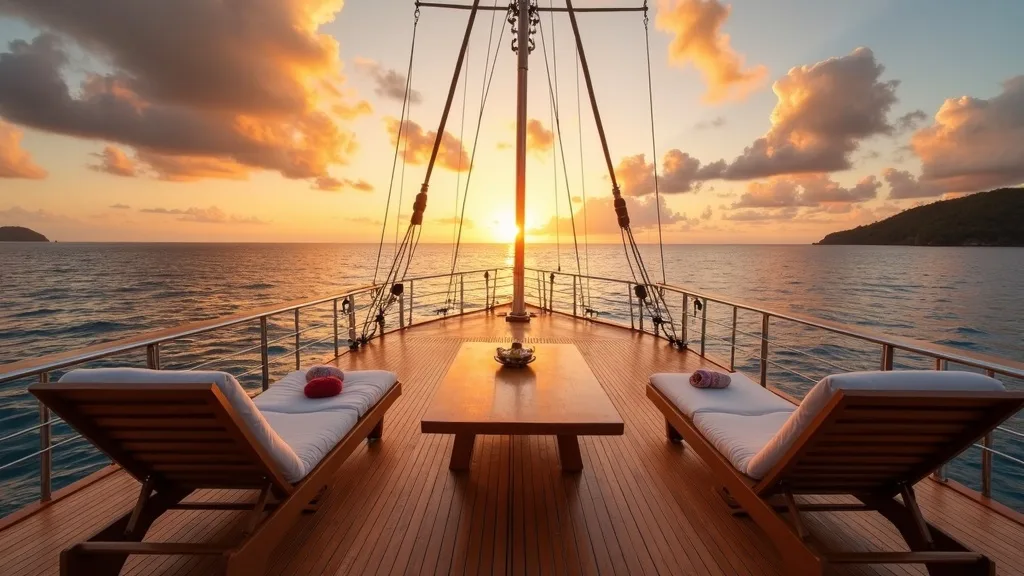
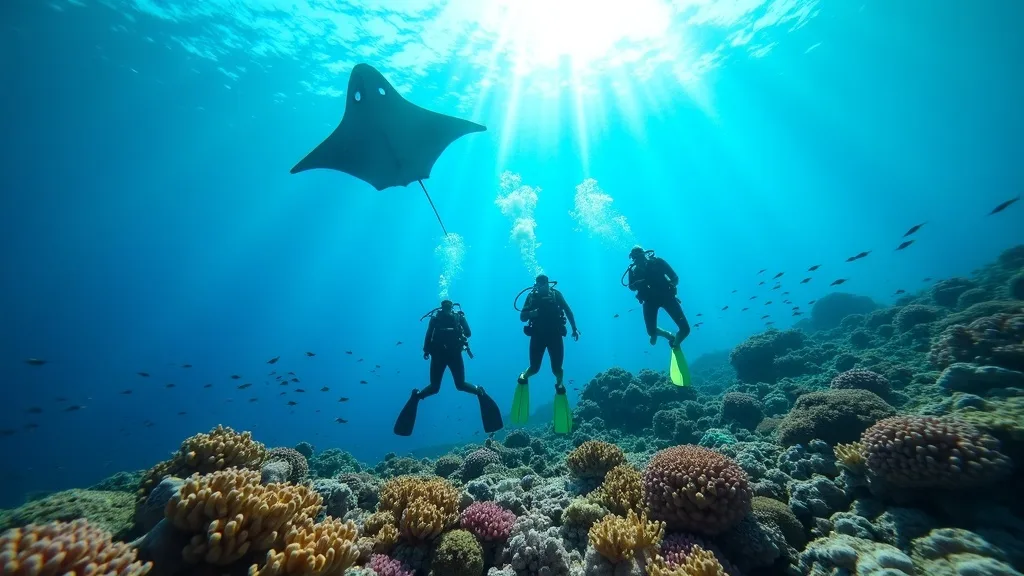
Most Raja Ampat cruising happens inside sheltered island chains, so seasickness is far less common here than travellers expect. The exceptions are the passages: Sorong or Waisai to Misool is an overnight leg of ten to fourteen hours, and the northern run toward Wayag crosses open water. Cabin choice and timing solve most of it.
Is seasickness common on a Raja Ampat charter?
Less than you would guess. The archipelago is a maze of roughly 1,500 islands, and the classic cruising grounds — the Dampier Strait, the waters around Kri and Mansuar, the Fam group, Misool’s inner karst — are protected by land on most sides. A phinisi at anchor in a bay is close to motionless. Days spent diving, snorkelling and going ashore involve almost no cruising at all.
What moves is the passages, and they are a small fraction of the trip. Understanding which ones your itinerary contains lets you plan around them instead of being surprised.
Which legs actually move?
| Leg | Duration | Exposure | Usual timing | Motion expectation |
|---|---|---|---|---|
| Sorong – Waisai (ferry or speedboat) | ~2 h ferry; 1–1.5 h private | Open strait | Daytime | Noticeable on a small fast boat; the roughest ride of many trips |
| Waisai – Dampier Strait anchorages | Under 1 h | Sheltered | Daytime | Minimal |
| Waisai – Piaynemo / Fam | 1.5–2.5 h by speedboat; overnight on a phinisi | Partly exposed | Night on a charter | Mild to moderate; usually slept through |
| Waisai – Wayag | ~2.5 h by speedboat; overnight leg on a phinisi | Open water in the far north | Overnight | Moderate; the most exposed northern run |
| Sorong / Waisai – Misool | ~10–14 h | Open crossing | Evening departure, morning arrival | The main event; plan for it |
Read that table as an itinerary-selection tool. A short Dampier Strait charter barely leaves sheltered water. A 10-night grand tour includes both the northern run and the Misool crossing. If motion is a serious concern in your group, that is a reason to choose the route, not a reason to stay home.
How does the season affect sea state?
The main cruising season runs October to April, with December to March the peak. Between roughly June and September the south-east winds strengthen enough that a large part of the fleet repositions away from the region entirely. That schedule exists precisely because of sea state: operators are not avoiding rain, they are avoiding uncomfortable crossings.
Inside the core season, conditions are usually benign and the captain has forecast data. Outside it, or at the margins, expect the route to be reviewed and occasionally reversed — a good captain will run the Misool leg a night early or a night late rather than into a building sea.
Which cabin should a motion-sensitive guest take?
This is the single most effective intervention and it costs nothing but a conversation before booking.
- Main deck, amidships — least pitch, moderate roll, good access to fresh air. The best cabin on the boat for anyone who feels motion.
- Avoid forward cabins on passage nights. Pitch is amplified at the bow; a forward lower-deck twin is the worst berth in a seaway.
- Avoid upper-deck cabins if roll is your trigger, even though they are the quietest and most scenic.
- Lower-deck amidships is a reasonable compromise: little pitch, no view, some engine noise.
Cabin positions, motion, noise and light are compared in full in our guide to phinisi cabin layouts. On a full-boat charter you allocate berths yourself, which is why we recommend that motion sensitivity outranks seniority when the group divides them up — a point developed in our couples and honeymoon charter notes for two-person parties who have the whole boat to choose from.
What actually works against seasickness?
- Start medication before you need it. Most oral remedies work prophylactically and poorly as a rescue. Take the first dose the evening before a crossing, not when the horizon starts moving.
- Go on deck, look at the horizon. The worst place to be is below, staring at a phone. The best is amidships on the open deck with a fixed reference point.
- Eat something dry and keep drinking water. An empty stomach is worse than a light one; dehydration makes everything worse.
- Sleep through it. This is why overnight passages are scheduled overnight. Lie down, head amidships, eyes closed.
- Skip the alcohol the night before a crossing. Non-negotiable if you are prone.
- Acupressure wristbands help some people. They are harmless, cheap and worth carrying.
- Scopolamine patches suit long crossings for some travellers — discuss with a doctor before travel, and note the side effects can matter to divers.
Point seven deserves emphasis for divers: some anti-nausea medications cause drowsiness or dry mouth and interact badly with a dive plan. Talk to your physician about which options are compatible with diving before you leave, alongside the insurance questions covered in our guide to dive safety, insurance and evacuation.
What does the crew carry?
A well-run charter boat holds basic anti-nausea medication in the ship’s first-aid supply, ginger tea and dry crackers in the galley, and a cruise director who has seen this a hundred times. Tell them early. The single biggest mistake guests make is suffering quietly below deck for two hours before mentioning it, by which point the only remedy left is time.
How does the captain change plans for weather?
Constantly, and quietly. Routes in Raja Ampat are written in pencil. If the northern crossing looks unpleasant, a good captain runs the Fam anchorage first and takes the exposed leg a day later. If a swell is running into an anchorage, the boat moves around the headland overnight and you wake up somewhere calmer than planned. On a private charter you will be told what changed and why; on a fixed-schedule boat you often will not.
Frequently asked questions
How rough is the sea in Raja Ampat?
Inside the island chains, usually calm. On open crossings during the core October-to-April season, moderate. The archipelago’s reputation for rough water comes mostly from the small fast boats used for transfers, not from cruising phinisi.
Is the Sorong to Waisai transfer bad?
It can be the least comfortable ninety minutes of the trip, because a small fast boat slams where a heavy wooden hull rides. The public ferry takes about two hours and is generally steadier than a private speedboat in chop.
Will I feel the boat at anchor?
Usually barely. Phinisi anchor in sheltered bays overnight and the motion is a gentle roll. Guests routinely report sleeping better aboard than in a hotel.
Can I dive if I have taken seasickness medication?
Ask your doctor before you travel. Some drugs cause drowsiness that is incompatible with a safe dive plan; others are widely used by divers. It is a conversation to have at home, not on the dive deck.
Are children more prone to it?
Some are. Choose a central-zone itinerary with short legs for young families rather than a route with two overnight crossings — the reasoning behind our shorter snorkelling-focused charters.
What if I get sick anyway?
Tell the crew, get on deck amidships, take the medication they offer, and know that it passes when the passage does. In four to six hours you will be anchored in flat water eating breakfast and it will feel like something that happened to someone else.
Who can advise on the calmest itinerary for my group?
We will, honestly — including telling you when a route you want is the wrong route for someone in your party. Komodo Luxury has run Indonesian charters since 2015; see Komodo Luxury. WhatsApp +62 811 3823 875 or [email protected]. Permit and fee logistics are covered separately in our marine park permit guide.